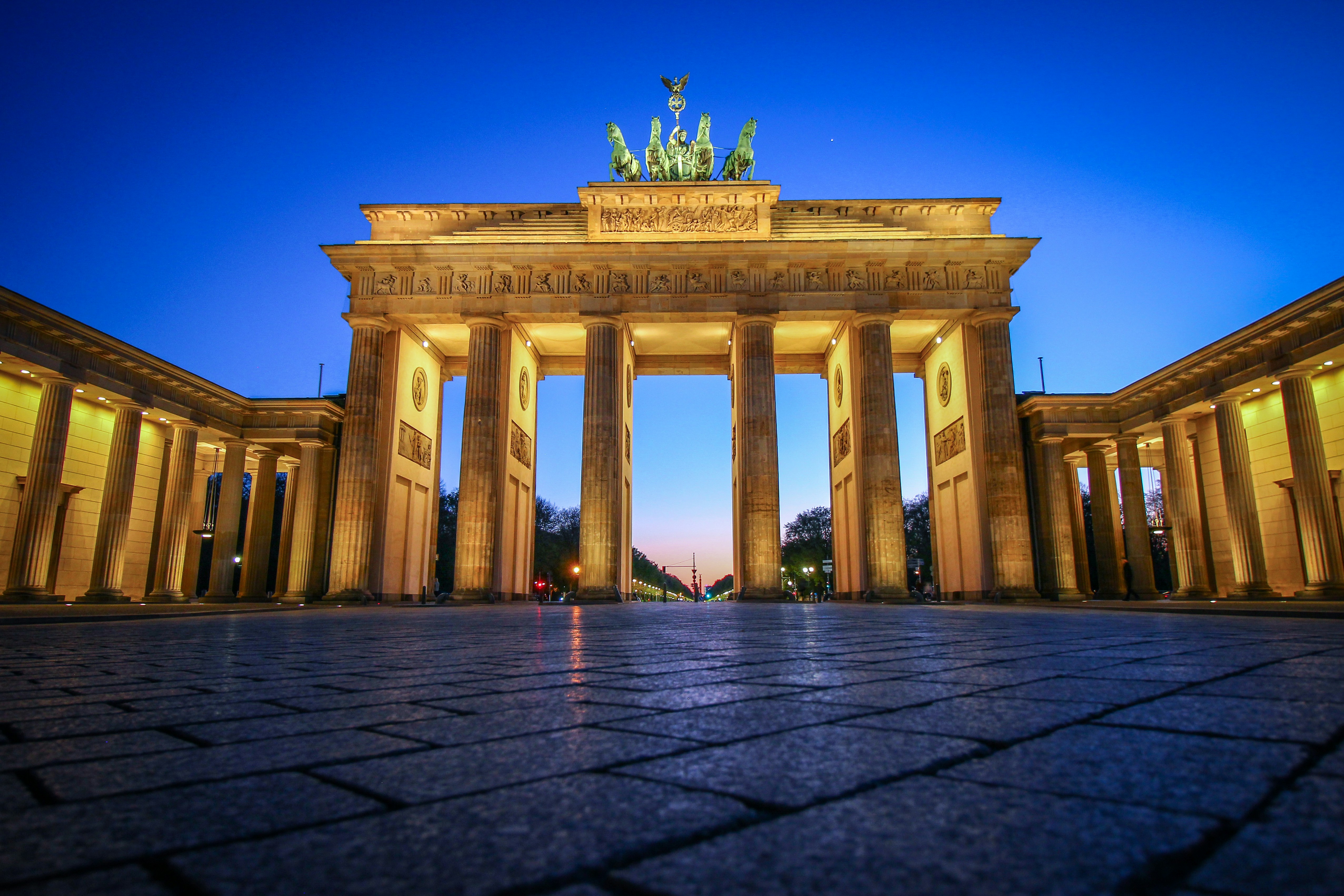
The Brandenburg Gate is Berlin's most iconic landmark and one of Germany's most important historical monuments. Once standing beside the Berlin Wall, it now represents freedom, peace, and German reunification. Located at Pariser Platz, it offers visitors a unique opportunity to experience Berlin's history while enjoying one of the city's most photographed locations. Free to visit and accessible at any time, it is an essential stop for anyone exploring Berlin.
F1
Before the Gate: Why It Was Built
The Brandenburg Gate was commissioned by King Frederick William II of Prussia and completed in 1791. Designed by architect Carl Gotthard Langhans, it was inspired by the ancient gateway of Athens and built as a symbol of peace and prosperity for Berlin.Architect Carl Gotthard Langhans created the gate in the neoclassical style, using twelve Doric columns arranged in six passageways. At the time, Berlin was growing into one of Europe's most important capitals, and the gate represented the strength and ambitions of the Kingdom of Prussia.
1788–1791 · Construction
F2
Through History
The gate witnessed many historic events. Napoleon seized the Quadriga in 1806, it survived World War II, and later stood directly beside the Berlin Wall. During the Cold War it became a symbol of Germany's division.
Napoleon · Wars · Division
F3
The place today
Today the Brandenburg Gate symbolizes peace, freedom and German reunification. Millions of visitors gather here every year for celebrations, festivals and important national events.
Freedom & Unity
F4
Understanding the Architecture
The monument consists of twelve Doric columns and five passageways. At the top stands the famous Quadriga, a chariot pulled by four horses driven by Victoria, the Roman goddess of victory.
26 m High · Neoclassical
F5
Getting Here
Nearest station: Brandenburger Tor. Accessible via S1, S2, S25, S26 and U5. Berlin Hauptbahnhof is approximately 20 minutes away on foot.
S-Bahn · U-Bahn
F6
Best Time To Visit
Early morning offers the fewest crowds. Sunset creates beautiful lighting, while nighttime reveals the monument fully illuminated, providing one of Berlin's most iconic views.
Within walking distance you can visit the Reichstag Building, the Memorial to the Murdered Jews of Europe, Tiergarten Park, Unter den Linden and Potsdamer Platz.