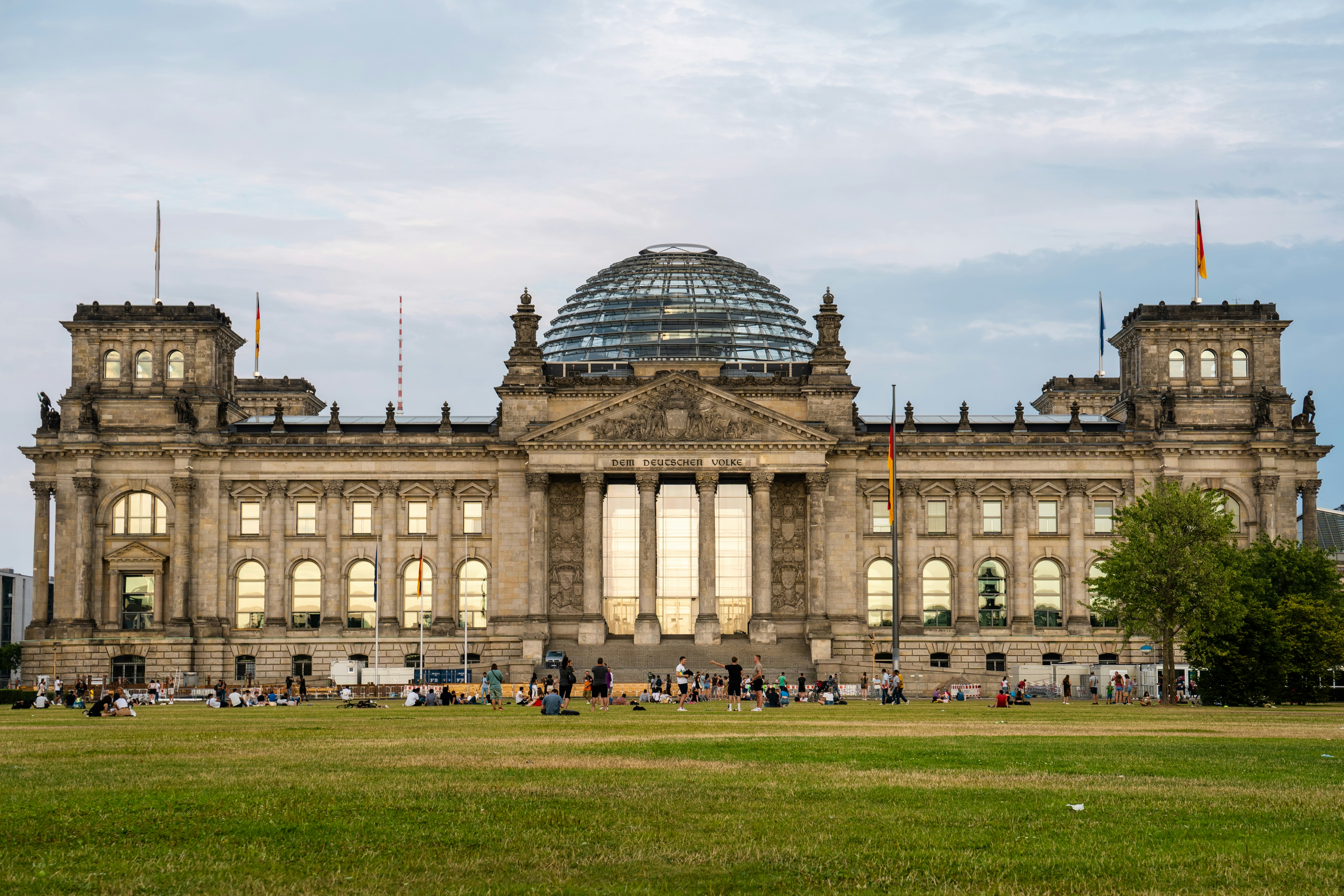
The Reichstag Building is the historic seat of the German Parliament and one of Berlin's most important landmarks. Known for its impressive glass dome and dramatic history, it has witnessed the rise and fall of empires, wars, division, and reunification. Today it stands as a symbol of democracy, transparency, and modern Germany.
F1
Origins of the Reichstag
The Reichstag was built between 1884 and 1894 to house the parliament of the German Empire. Designed by architect Paul Wallot, it quickly became one of the most important political buildings in Germany and a symbol of national unity.
1884–1894 · Construction
F2
The Fire of 1933
On 27 February 1933, a fire severely damaged the Reichstag. The event became one of the most controversial moments in German history and was used by Adolf Hitler's government to expand its power and restrict civil liberties.
A Turning Point
F3
War and Destruction
The building suffered extensive damage during World War II. By the end of the conflict, it stood heavily damaged and became one of the most recognizable symbols of Berlin's devastation.
World War II
F4
Germany Divided
During the Cold War, the Reichstag stood only a short distance from the Berlin Wall. Although it was no longer used as a parliament building, it remained a powerful symbol of Germany's divided history.
Cold War Era
F5
The Glass Dome
After reunification, British architect Norman Foster redesigned the Reichstag and added the famous glass dome. Visitors can walk inside the dome while enjoying panoramic views of Berlin.
Norman Foster
F6
German Democracy Today
Today the Reichstag is home to the Bundestag, Germany's federal parliament. It remains the center of political decision-making and one of the country's most important institutions.
Bundestag
F7
Visitor Information
Location: Platz der Republik 1
Nearest Station:
Brandenburger Tor
Admission:
Free with advance registration
Recommended Visit:
60–90 minutes
Free Entry
F8
What To Explore Nearby
Nearby attractions include:
• Brandenburg Gate
• Tiergarten Park
• Memorial to the Murdered Jews of Europe
• Unter den Linden
• Berlin Central Station